Buckingham Palace and 10 Downing Street
The United Kingdom keeps its head of state and its head of government in two buildings a mile apart. The history of both, and the ledger of every prime minister since Walpole.
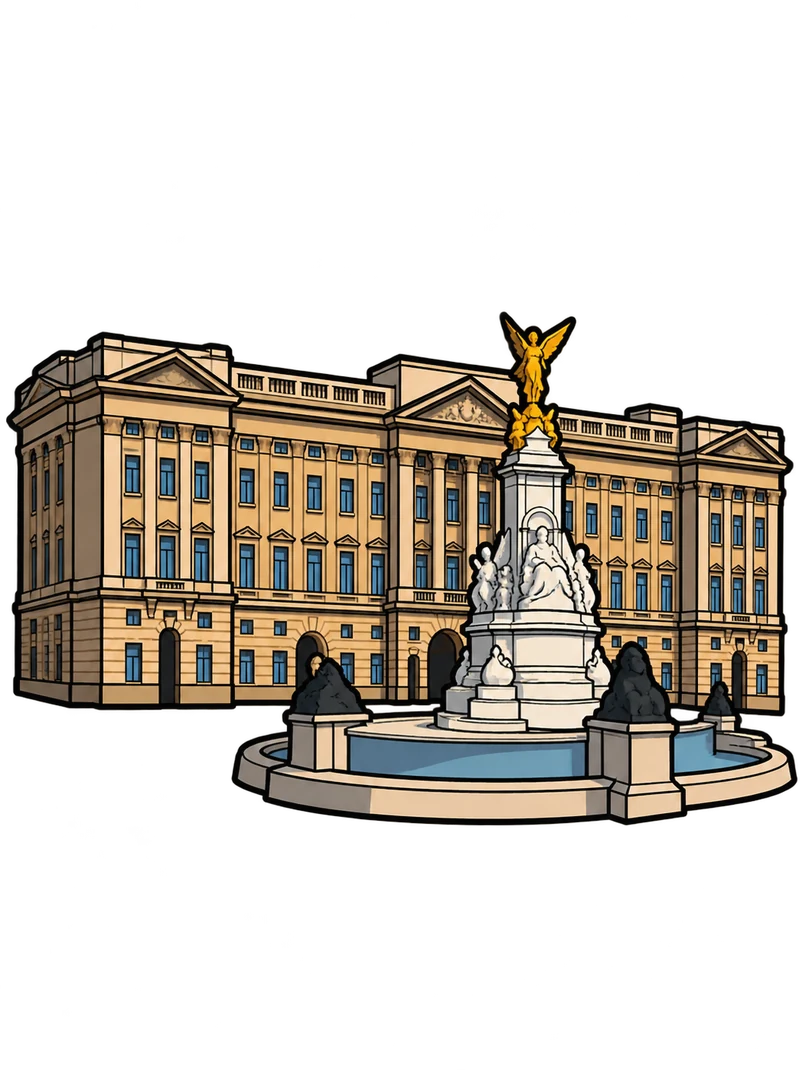
The United Kingdom splits the top of its government between two buildings about a mile apart. The monarch is head of state and lives at Buckingham Palace, at the end of the Mall. The prime minister is head of government and works at 10 Downing Street, in Whitehall. The monarch appoints the prime minister, and by convention appoints whoever can command a majority in the House of Commons.
| Building | Buckingham Palace |
|---|---|
| What Wikidata calls it | historic house museum |
| Capital | London |
| Form of government | parliamentary constitutional monarchy; a Commonwealth realm |
| Population | 67,326,569 |
Buckingham Palace
The palace began as Buckingham House, built in 1703 for John Sheffield, Duke of Buckingham. George III bought it in 1761 as a private home for Queen Charlotte. George IV had the architect John Nash rebuild it on a much larger scale from the 1820s. Queen Victoria was the first monarch to make it her official residence, when she came to the throne in 1837. The front facing the Mall, with the balcony, was added in 1847 and refaced in stone in 1913.
10 Downing Street
Downing Street is named for Sir George Downing, who built a row of houses there in the 1680s. George II offered No. 10 to Sir Robert Walpole as a personal gift. Walpole refused it for himself and accepted it for the office of First Lord of the Treasury, and he moved in in 1735. Walpole is generally counted as the first prime minister. The title was not used in law until the twentieth century, and the prime minister still holds the office of First Lord of the Treasury. That is what the brass plate on the door says.
Who held the offices
The ledger records 82 prime-ministerial terms held by 60 people, from Walpole in 1721. Many people appear more than once, because a prime minister who lost office and later returned starts a new row. William Gladstone formed four governments.
| # | Held by | From | To | Party |
|---|---|---|---|---|
| 81 | Andy Burnham | July 20, 2026 | incumbent | |
| 80 | Keir Starmer | July 5, 2024 | July 20, 2026 | |
| 79 | Rishi Sunak | October 25, 2022 | July 5, 2024 | |
| 78 | Liz Truss | September 6, 2022 | October 25, 2022 | |
| 77 | Boris Johnson | July 24, 2019 | September 6, 2022 | |
| 76 | Theresa May | July 13, 2016 | July 24, 2019 | |
| 75 | David Cameron | May 11, 2010 | July 13, 2016 | |
| 74 | Gordon Brown | June 27, 2007 | May 11, 2010 | |
| 73 | Tony Blair | May 2, 1997 | June 27, 2007 | |
| 72 | John Major | November 28, 1990 | May 2, 1997 | |
| 71 | Margaret Thatcher | May 4, 1979 | November 28, 1990 | |
| 70 | James Callaghan | April 5, 1976 | May 4, 1979 | |
| 69 | Harold Wilson | March 4, 1974 | April 5, 1976 | |
| 68 | Edward Heath | June 19, 1970 | March 4, 1974 | |
| 67 | Harold Wilson | October 16, 1964 | June 19, 1970 | |
| Alec Douglas-Home | October 19, 1963 | October 16, 1964 | ||
| Harold Macmillan | January 10, 1957 | October 18, 1963 | ||
| Anthony Eden | April 6, 1955 | January 9, 1957 | ||
| Winston Churchill | October 26, 1951 | April 5, 1955 | ||
| Clement Attlee | July 26, 1945 | October 26, 1951 | ||
| Winston Churchill | May 10, 1940 | July 26, 1945 | ||
| Neville Chamberlain | May 28, 1937 | May 10, 1940 | ||
| Stanley Baldwin | June 7, 1935 | May 28, 1937 | ||
| Ramsay MacDonald | June 5, 1929 | June 7, 1935 | ||
| Stanley Baldwin | November 4, 1924 | June 5, 1929 | ||
| Ramsay MacDonald | January 22, 1924 | November 4, 1924 | ||
| Stanley Baldwin | May 23, 1923 | January 16, 1924 | ||
| Bonar Law | October 23, 1922 | May 22, 1923 | ||
| David Lloyd George | December 6, 1916 | October 19, 1922 | ||
| H. H. Asquith | April 8, 1908 | December 5, 1916 | ||
| Henry Campbell-Bannerman | December 5, 1905 | April 3, 1908 | ||
| Arthur Balfour | July 11, 1902 | December 5, 1905 | ||
| Robert Gascoyne-Cecil, 3rd Marquess of Salisbury | June 25, 1895 | July 11, 1902 | ||
| Archibald Primrose, 5th Earl of Rosebery | March 5, 1894 | June 22, 1895 | ||
| William Ewart Gladstone | August 15, 1892 | March 2, 1894 | ||
| Robert Gascoyne-Cecil, 3rd Marquess of Salisbury | July 25, 1886 | August 11, 1892 | ||
| William Ewart Gladstone | February 1, 1886 | July 20, 1886 | ||
| Robert Gascoyne-Cecil, 3rd Marquess of Salisbury | June 23, 1885 | January 28, 1886 | ||
| William Ewart Gladstone | April 23, 1880 | June 9, 1885 | ||
| Benjamin Disraeli | February 20, 1874 | April 21, 1880 | ||
| William Ewart Gladstone | December 3, 1868 | February 17, 1874 | ||
| Benjamin Disraeli | February 27, 1868 | December 1, 1868 | ||
| Edward Smith-Stanley, 14th Earl of Derby | June 28, 1866 | February 27, 1868 | ||
| John Russell, 1st Earl Russell | October 29, 1865 | June 28, 1866 | ||
| Henry Temple, 3rd Viscount Palmerston | June 12, 1859 | October 18, 1865 | ||
| Edward Smith-Stanley, 14th Earl of Derby | February 20, 1858 | June 11, 1859 | ||
| Henry Temple, 3rd Viscount Palmerston | February 6, 1855 | February 19, 1858 | ||
| George Hamilton-Gordon, 4th Earl of Aberdeen | December 19, 1852 | January 30, 1855 | ||
| Edward Smith-Stanley, 14th Earl of Derby | February 23, 1852 | December 19, 1852 | ||
| John Russell, 1st Earl Russell | June 30, 1846 | February 23, 1852 | ||
| Robert Peel | August 30, 1841 | June 29, 1846 | ||
| William Lamb, 2nd Viscount Melbourne | April 18, 1835 | August 30, 1841 | ||
| Robert Peel | December 10, 1834 | April 8, 1835 | ||
| Arthur Wellesley, 1st Duke of Wellington | November 17, 1834 | December 9, 1834 | ||
| William Lamb, 2nd Viscount Melbourne | July 16, 1834 | November 14, 1834 | ||
| Charles Grey, 2nd Earl Grey | November 22, 1830 | July 16, 1834 | ||
| Arthur Wellesley, 1st Duke of Wellington | January 22, 1828 | November 16, 1830 | ||
| F. J. Robinson, 1st Viscount Goderich | August 31, 1827 | January 21, 1828 | ||
| George Canning | April 10, 1827 | August 8, 1827 | ||
| Robert Jenkinson, 2nd Earl of Liverpool | June 8, 1812 | April 9, 1827 | ||
| Spencer Perceval | October 4, 1809 | May 11, 1812 | ||
| William Cavendish-Bentinck, 3rd Duke of Portland | March 31, 1807 | October 4, 1809 | ||
| William Wyndham Grenville, 1st Baron Grenville | February 11, 1806 | March 31, 1807 | ||
| William Pitt the Younger | May 10, 1804 | March 14, 1801 | ||
| Henry Addington, 1st Viscount Sidmouth | March 14, 1801 | May 10, 1804 | ||
| William Pitt the Younger | December 19, 1783 | March 14, 1801 | ||
| William Cavendish-Bentinck, 3rd Duke of Portland | April 2, 1783 | December 19, 1783 | ||
| William Petty, 2nd Earl of Shelburne | July 4, 1782 | April 2, 1783 | ||
| Charles Watson-Wentworth, 2nd Marquess of Rockingham | March 27, 1782 | July 1, 1782 | ||
| Frederick North, 2nd Earl of Guilford | January 28, 1770 | March 22, 1782 | ||
| Augustus FitzRoy, 3rd Duke of Grafton | October 14, 1768 | January 28, 1770 | ||
| William Pitt, 1st Earl of Chatham | July 30, 1766 | October 14, 1768 | ||
| Charles Watson-Wentworth, 2nd Marquess of Rockingham | July 13, 1765 | July 30, 1766 | ||
| George Grenville | April 16, 1763 | July 13, 1765 | ||
| John Stuart, 3rd Earl of Bute | May 26, 1762 | April 8, 1763 | ||
| Thomas Pelham-Holles, 1st Duke of Newcastle-upon-Tyne | July 2, 1757 | May 26, 1762 | ||
| William Cavendish, 4th Duke of Devonshire | November 16, 1756 | June 25, 1757 | ||
| Thomas Pelham-Holles, 1st Duke of Newcastle-upon-Tyne | March 16, 1754 | November 16, 1756 | ||
| Henry Pelham | August 27, 1743 | March 6, 1754 | ||
| 2 | Spencer Compton, 1st Earl of Wilmington | February 16, 1742 | July 2, 1743 | |
| 1 | Robert Walpole | April 15, 1721 | February 11, 1742 | |
| Basil Feilding, 6th Earl of Denbigh | not recorded | not recorded |
82 tenures, 1 without a recorded date. Source: Wikidata, retrieved 2026-09-23.
The monarch's lineage in the source starts in 1927, not in 1707 or 1801. The office changed its legal form several times: the Kingdom of Great Britain was formed in 1707, the United Kingdom of Great Britain and Ireland in 1801, and the present title was set in 1927 after most of Ireland left. Wikidata records each form as a separate office, and GovGlobe shows the current one. The earlier monarchs are in the source under their own offices.
| # | Held by | From | To | Party |
|---|---|---|---|---|
| Charles III | September 8, 2022 | incumbent | ||
| Elizabeth II | February 6, 1952 | September 8, 2022 | ||
| George VI | December 11, 1936 | February 6, 1952 | ||
| Edward VIII | January 20, 1936 | December 11, 1936 | ||
| George V | April 12, 1927 | January 20, 1936 |
5 tenures. Source: Wikidata, retrieved 2026-09-23.
Last updated September 22, 2026.